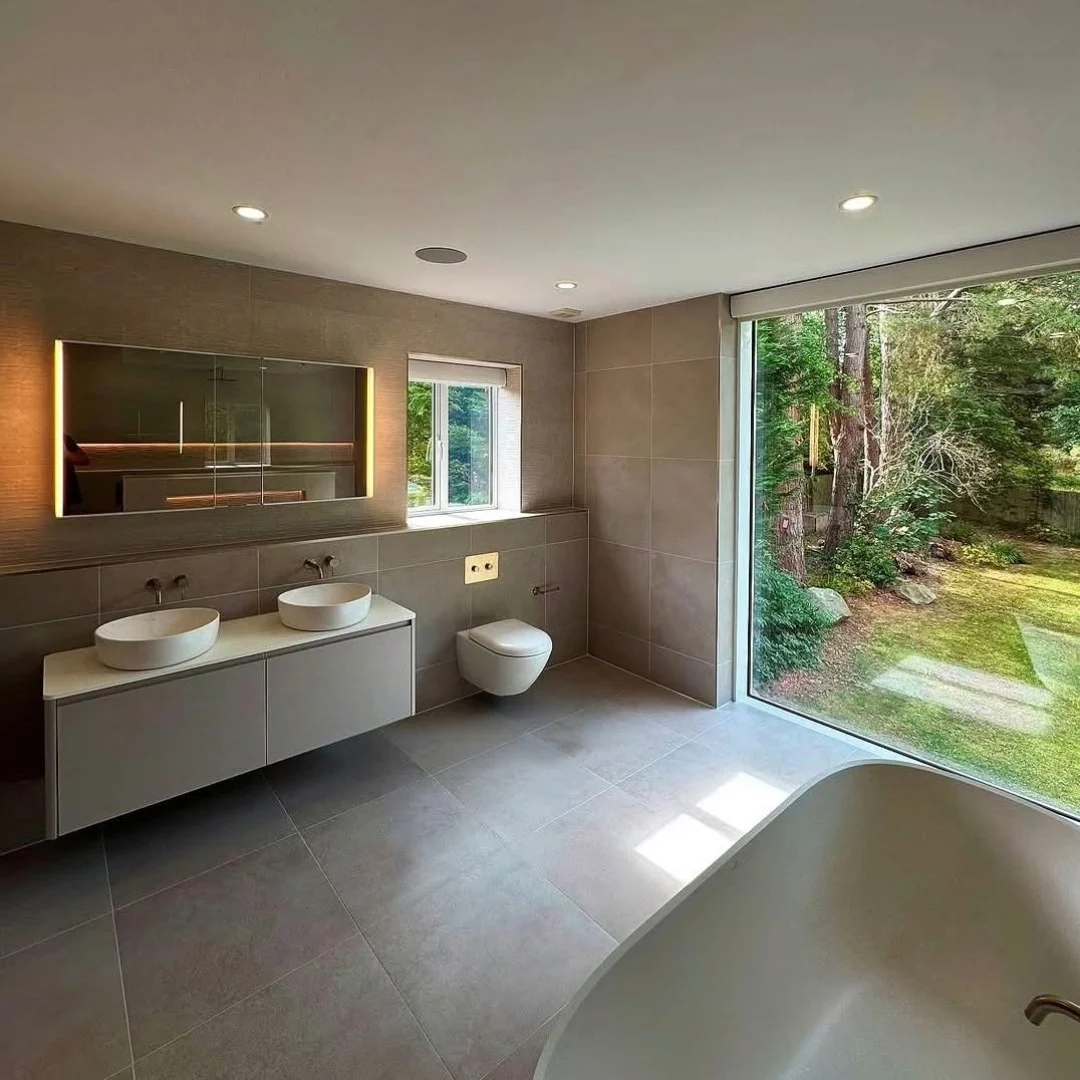
Contrary to the fleeting trends and minimalist uniformity that seem to dominate online spaces like Instagram and Pinterest, there has been a resurgent appreciation in recent years for the timeless quality and subtle luxury of the ‘old money’ aesthetic.
This style, deeply rooted in tradition and impeccable taste, is not about overt displays of wealth. Rather, it’s more about a quiet, comfortable confidence reflected in one’s surroundings. It’s the complete opposite of ‘new money’ flash, instead prioritising quality craftsmanship, heritage details, and materials that improve with age.
For our clients, achieving this look is an exercise in discerning selection, creating a private sanctuary that feels less like a functional space and more like a cherished, bespoke dressing room from a stately home or classic European apartment.
It’s a space that whispers sophistication, designed not for the immediate ‘wow’ factor, but for long-lasting pleasure and appeal. To help you curate a bathroom that embodies this understated elegance, we’ve outlined 10 essential design features that form the backbone of the authentic old money aesthetic.
1. Bespoke, natural stone surfaces
The absolute cornerstone of the old money bathroom is the considered use of natural stone. Forget the uniformity of synthetic materials; this look demands the authenticity and unique character of marble, travertine, or limestone.
Carrara or Calacatta marble, with their delicate grey and gold veining, are perennial favourites, but a deep, heavily veined Nero Marquina or a muted Crema Marfil can offer a bolder, more established look.
The application should be generous and intentional: a thick-slab countertop, large-format floor tiles, or even a book-matched marble shower surround. The goal is to convey weight and permanence.
Furthermore, opt for a honed or leathered finish over a highly polished one. This subtle treatment diffuses the light, reduces glare, and offers a softer, more historical patina. This instantly elevates the space beyond the typical modern sheen. This is an investment that will never depreciate in style.
2. A layered, neutral colour palette
The old money aesthetic shuns harsh contrasts and vibrant, trend-driven colours. Instead, it relies on a sophisticated, multi-layered neutral palette that offers depth and tranquillity. Think soft, warm whites (like historical plaster), deep, muted creams, stone greys, and gentle, dusty pastels.
Consider using classic colours borrowed from nature or historical interiors: deep bottle greens, soft sage, or a muted blue. The key is subtlety. If you introduce colour, let it be in the form of deep, saturated tones used sparingly, perhaps on bespoke cabinetry or a feature wall.
The overall effect must be harmonious and serene, allowing the quality of the materials and the architectural details to take centre stage. The space should feel inherently restful and effortlessly chic, never requiring a loud colour to grab attention.

3. The freestanding bathtub
While contemporary design favours sleek, built-in soaking tubs, the old money bathroom demands a piece of sculptural history. The ideal choice is a traditional clawfoot tub or, for a slightly more transitional feel, a solid, skirted or slipper bathtub. These pieces function as art, standing independently and commanding attention.
Look for a tub with substantial visual weight, often in cast iron with an enamel finish, or even a sculpted stone composite. You should also consider the feet of the tub. Options like lion’s paw or simple ball and claw designs in an aged metal finish add a final layer of beautiful heritage detailing.
The placement of the tub should make the most of the room’s proportions. It is best positioned under a window or as the standout feature upon entering the room, inviting long, luxurious soaks. One of our previous projects is a perfect example of how this kind of composition can help serve as the basis of a strong old money aesthetic.

4. Furniture-style, bespoke cabinetry
Move beyond generic, off-the-shelf vanities. The old money bathroom features bespoke, furniture-grade cabinetry that looks as though it was built specifically for the room, perhaps centuries ago. This means incorporating styles like classic in-frame joinery, shaker panels, or raised-panel doors, all indicative of unparalleled quality.
The materials matter immensely: dark, rich woods like walnut or mahogany can be stained to a deep patina, or alternatively, a lighter wood can be painted in one of the classic muted tones mentioned above.
The vanity should sit on legs, mimicking a piece of fine furniture, or be fully integrated into the wall structure. The use of traditional brass butt hinges and solid wood drawer boxes further underscores the commitment to quality, elevating the function of storage to an art form.
5. Elegant wainscoting and panelling
Architectural detail is paramount to the old money aesthetic. It’s what separates a well-decorated room from a well-designed room. Incorporating wainscoting, beadboard, or traditional wall panelling instantly introduces the kind of architectural gravitas found in heritage properties.
Typically, wainscoting is installed to two-thirds the height of the wall or at the classic ‘chair-rail’ height. Painting the panelling in a slightly different shade than the wall above it adds a subtle textural interest. This not only elevates the visual interest but also serves a practical purpose, protecting the lower half of the wall from moisture.
For true authenticity, the panelling should be finished with a classic, pronounced cornice or moulding where the wall meets the ceiling, drawing the eye upwards and enhancing the room’s perceived height.

6. Unlacquered brass or polished nickel features
Modern chrome or brushed stainless steel fixtures often look too utilitarian for this aesthetic. Instead, the old money look favours metals that possess a natural elegance and, crucially, a capacity to age gracefully.
Unlacquered brass really is the ultimate choice. It begins bright and gradually develops a rich, dark patina over time and use. This creates an authentically aged look that tells a story.
If brass feels too rustic, polished nickel offers a cooler, more restrained luxury. It provides a mirror-like shine that is warmer than chrome and complements the grey and white tones of marble superbly.
The style of the taps should be period-correct: think elegant bridge faucets, three-hole sets, and exposed pipework beneath a console basin. Every handle, shower valve, and towel rail should match, creating a cohesive, carefully curated metal narrative throughout the space.
7. Statement lighting and wall sconces
The lighting in an old money bathroom should feel ambient, decorative, and intentionally un-recessed. Standard downlights should be kept to a minimum, replaced instead by fixtures that act as pieces of jewellery for the room.
A small, elegant crystal chandelier or a solid brass alabaster pendant can serve as the main overhead fixture, creating a soft, warm glow. Crucially, the vanity area should be illuminated by wall sconces. These should be mounted at eye-level and feature classic finishes like aged brass.
Pleated fabric shades or frosted glass globes complete the look. The soft, directional light from sconces eliminates harsh shadows and casts a flattering, intimate light that contributes significantly to the room’s luxurious atmosphere.

8. Framed and antique mirrors
A modern, frameless mirror can instantly betray the historical feel of the old money aesthetic. Instead, select a mirror that looks like a piece of salvaged antique furniture. This can be a large, ornate gilt-framed mirror that leans against the wall, or an elegant, simple metal-framed mirror in the same polished nickel or antique brass as the fixtures.
For the ultimate touch of subtle antiquity, consider a mirror with a lightly antiqued or foxed surface. This intentional subtle degradation, appearing as slight spotting or darkening beneath the glass, gives the illusion of a mirror that has been in place for a hundred years, adding depth and character that cannot be replicated with new, flawless glass.

9. Patterned or mosaic flooring
While large-format stone tiling is excellent for walls and counters, the floor often benefits from a smaller, more intricate design to balance the space. Classic patterned tiles, such as geometric black-and-white mosaics, small octagonal or hexagon tiles, or even a simple basketweave design, are perfect here.
These patterns are timeless and have been used in grand homes for centuries. They provide visual texture and an anchoring base without overwhelming the other materials. Alternatively, a uniform, small square tile laid in a grid pattern provides a clean, restrained look.
In all cases, the grout lines should be thin and meticulously maintained, and the integration of underfloor heating is a non-negotiable modern comfort that seamlessly marries the traditional aesthetic with contemporary luxury.

10. Luxury textiles and thoughtful accessories
Finally, the old money aesthetic relies on the careful selection of soft furnishings and personal items to make the space feel lived-in and comfortable, not sterile or staged. Towels should be thick, high-quality, and monochromatic, perhaps a creamy cotton or a deep French linen, draped elegantly on an antique towel rail or shelf.
Avoid plastic or overtly branded products. Decant soaps and lotions into simple, beautiful glass or ceramic dispensers. Introduce small, thoughtful elements: an antique silver tray for jewellery, a small velvet bench or stool, or a vintage-style carafe of water.
A single, small crystal vase with fresh flowers or a well-bound book placed casually on the vanity transforms the bathroom from a utility room into a personal, luxurious retreat – the true definition of timeless old money style.
Your old money bathroom awaits with H2O
Achieving the old money aesthetic is an investment in quality, a commitment to enduring design, and a rejection of the disposable trend cycle. It requires attention to detail, a respect for classic craftsmanship, and a willingness to choose the best materials available from the most acclaimed brands.
At H2O, we specialise in translating this philosophy into bespoke, functional spaces. By carefully integrating these 10 features, your bathroom can become a lasting expression of quiet elegance and comfort, a truly timeless sanctuary that will look just as stunning decades from now as it does today. Book your consultation with us to get started.