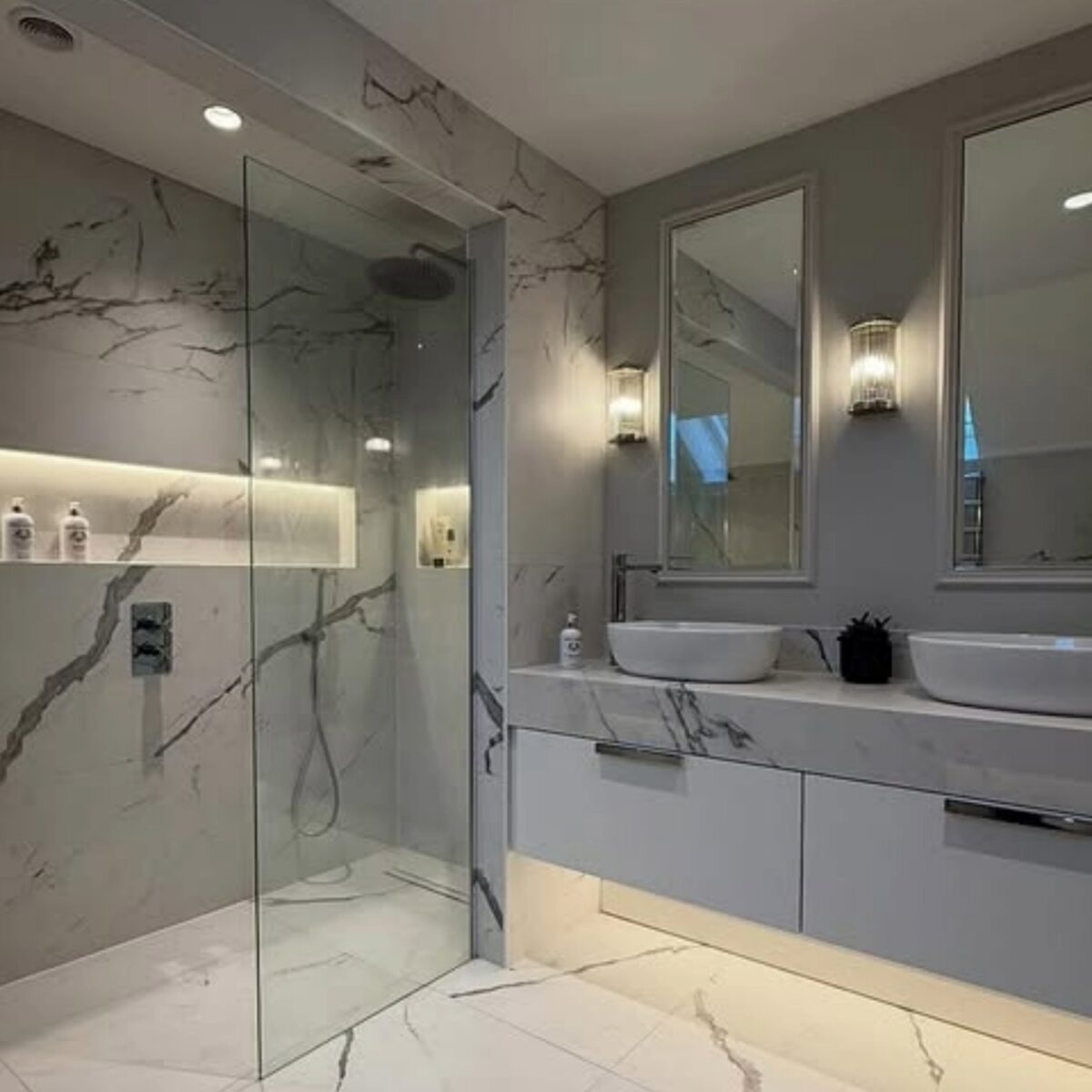
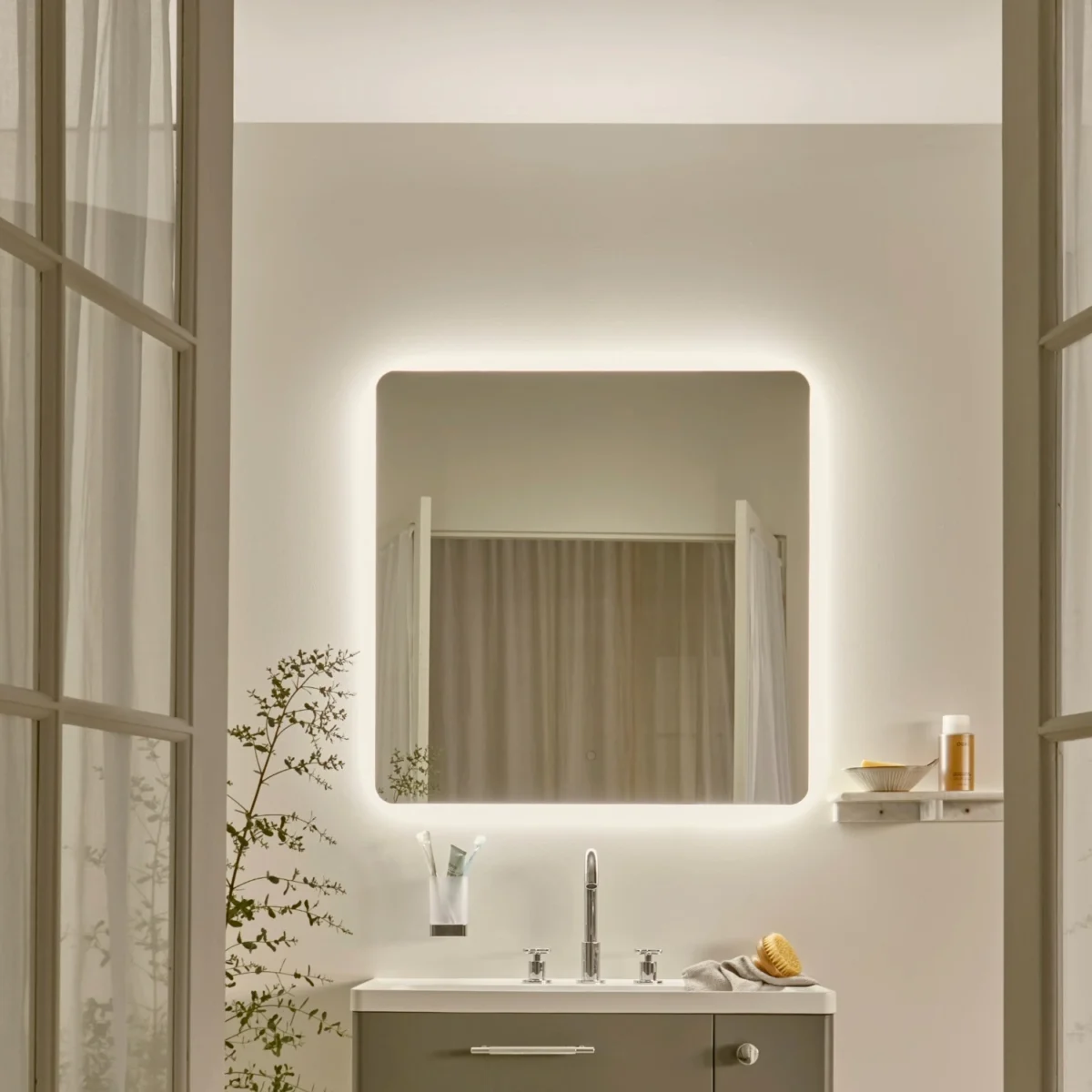
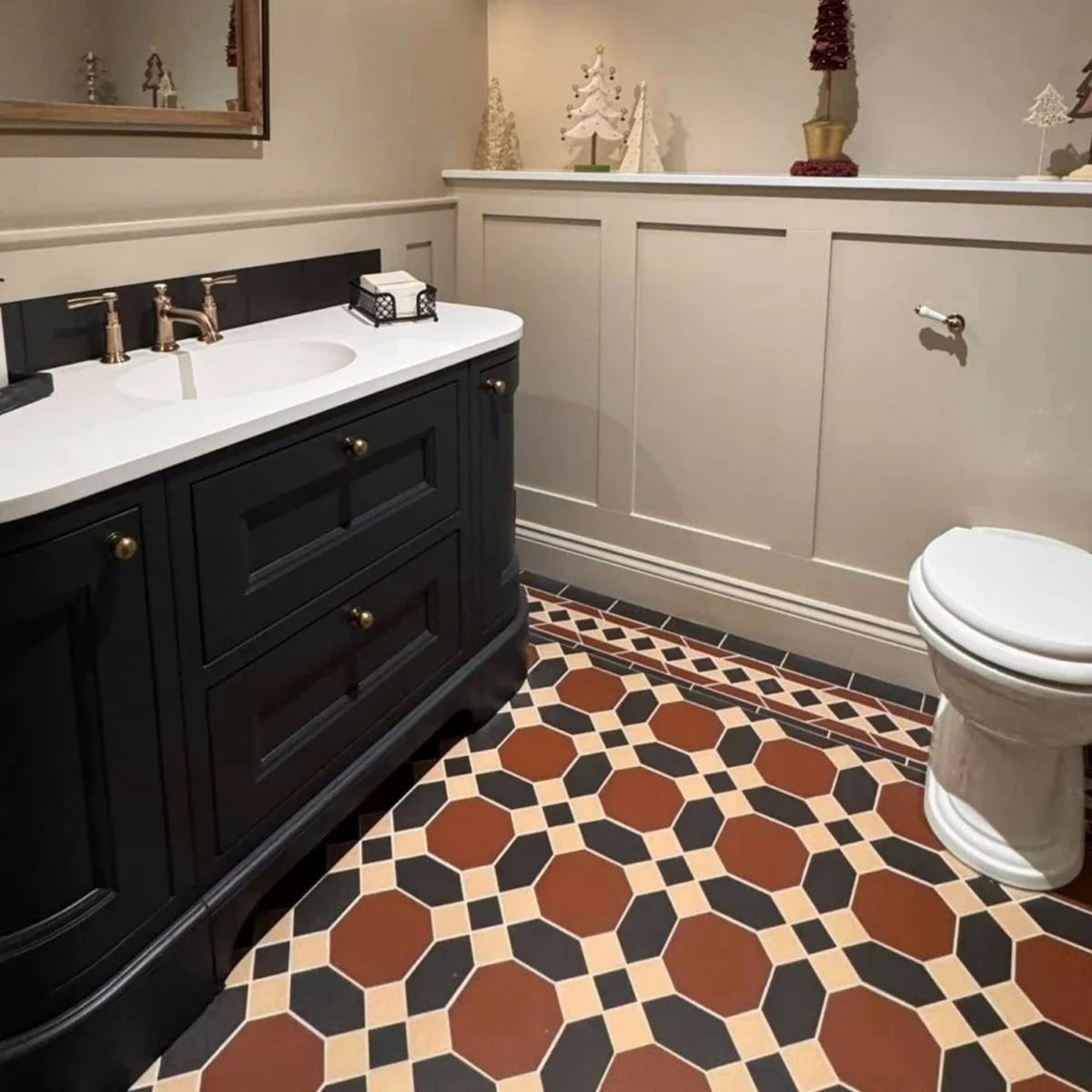
In recent years, bathroom design has shifted away from enclosed, utility-led layouts, favouring spaces that feel more considered.
In contemporary bathroom design, there is a growing emphasis on visual lightness and clean structure, where every element contributes to a sense of balance rather than competing for attention.
Floating vanities have emerged as a natural response to this approach. In this blog post, we look at why they have become such a prominent feature of contemporary bathroom design, focusing on their spatial and functional advantages.
What is a floating vanity?
A floating vanity is a wall-mounted bathroom unit that sits clear of the floor rather than being supported from below.
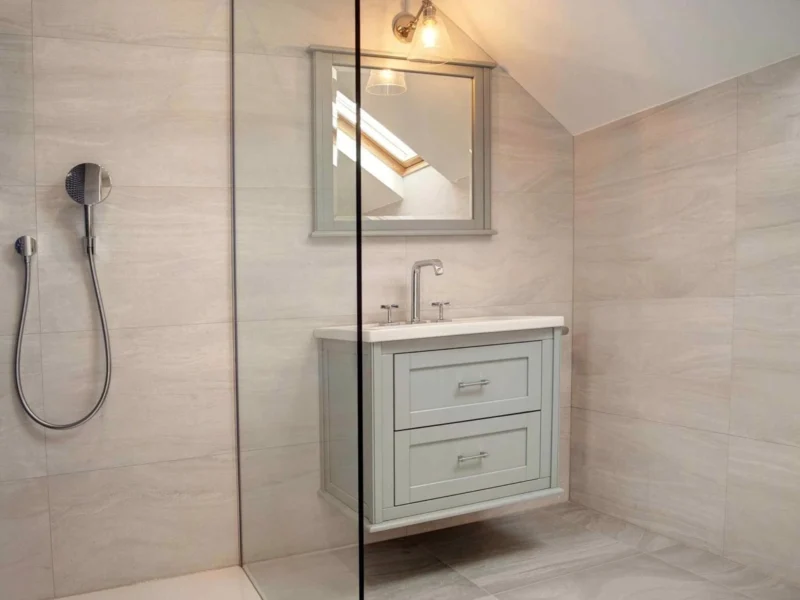
Unlike traditional floor-mounted vanity units, which rely on legs or a plinth for stability, floating vanities are fixed directly into the wall structure, allowing the floor space beneath to remain visible and uninterrupted. Many contemporary ranges from manufacturers such as Villeroy & Boch, KEUCO, and Burbidge & Son use this approach to create furniture that feels more refined and architecturally integrated.
This distinction has a clear effect on how a bathroom feels. Floor-mounted units ground the space visually, while floating vanities create a greater sense of openness and architectural intent. They help create a lighter, more streamlined layout that aligns with contemporary bathroom design principles.
From a construction perspective, floating vanities are engineered with reinforced frames and secure wall-fixing systems designed to support both the unit itself and everyday use. These typically include concealed metal brackets or full-width mounting rails, anchored into solid walls or appropriately reinforced studwork.
When correctly specified and installed, these provide long-term stability without compromising the clean, minimalist appearance of the unit.
How floating vanities became a contemporary design staple
The widespread adoption of floating vanities is closely tied to broader shifts in how bathrooms are used and experienced. This includes:
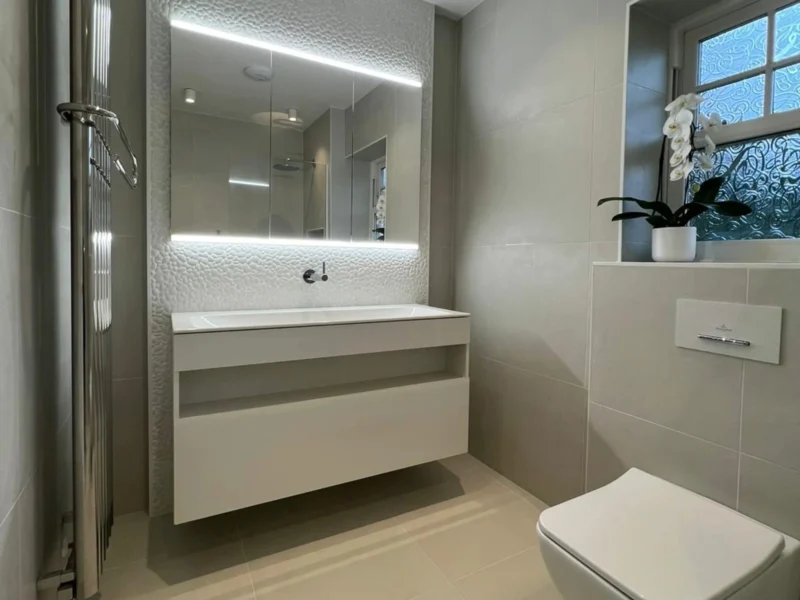
The influence of minimalist and modernist design
Minimalist and modernist design principles, with their focus on proportion and purposeful detailing, have encouraged the removal of unnecessary visual weight.
In bathrooms, this translated into fittings that feels integrated with the architecture rather than applied on top of it.
Bathrooms as experiential spaces
Bathrooms have evolved beyond their traditional functional role. Increasingly influenced by spa and hospitality environments, they are now designed to promote refinement and a sense of retreat.
Floating vanities support this shift by contributing to a lighter, more composed atmosphere, reinforcing a feeling of balance rather than dominance within the room.
Open layouts and visual continuity
Open layouts and carefully managed sightlines have become more common, particularly in higher-end residential and hospitality projects.
Wall-mounted vanities help maintain visual continuity by keeping floor areas clear and reducing interruptions within the space.
This approach allows bathrooms to feel less segmented and more intentional, with individual elements working together rather than competing for attention.
Responding to compact living and evolving expectations
Practical considerations have also influenced their popularity. As urban living spaces become more compact, designers are increasingly challenged to create bathrooms that feel comfortable rather than constrained.
Floating vanities help enhance the perception of space by keeping the floor visually open, even where square footage is limited.
Alongside this, there is a growing preference for uncluttered surfaces and fittings that feel deliberate rather than dominant, a balance that floating vanities are well placed to achieve while still supporting everyday storage and usability.
Visual impact: creating space without adding square footage
One of the most immediate benefits of floating vanities is the way they alter how space is perceived.
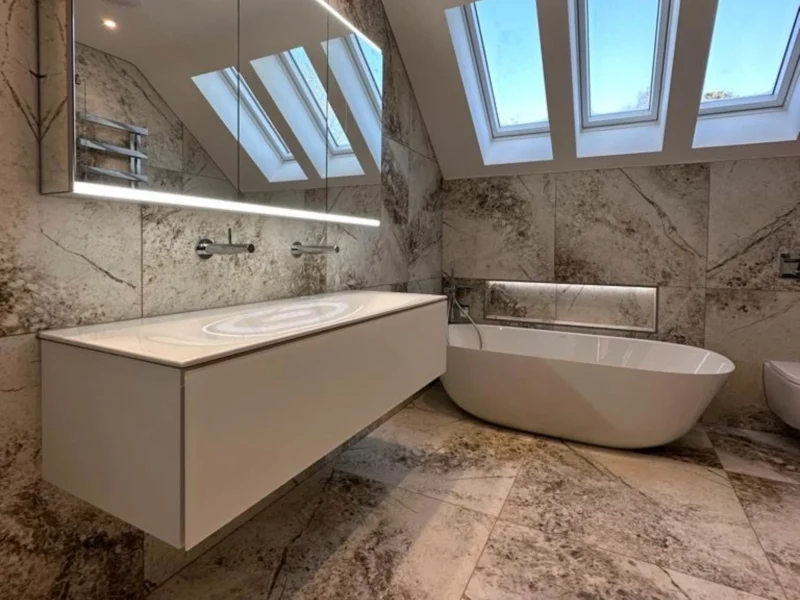
By lifting the unit away from the floor, they allow light to travel more freely through the room, reducing shadows and visual interruptions. This subtle change can make a bathroom feel more open, even where the overall square footage remains unchanged.
As briefly mentioned earlier in the blog post, floating vanities are often used as a strategic design tool to prevent the room from feeling overcrowded. In smaller bathrooms, the exposed floor area creates breathing space, while the wall-mounted form keeps storage and basin elements neatly contained.
In larger, high-end bathrooms, the same principle applies but with a different emphasis. Here, floating vanities contribute to a more architectural layout, reinforcing symmetry rather than simply addressing spatial constraints.
For a cohesive finish, floating vanities are frequently paired with wall-hung toilets and concealed storage systems. Together, these elements create a consistent visual language, where fixtures appear lighter and more integrated within the space.
Practical advantages beyond aesthetics
While floating vanities are often chosen for their visual impact, their appeal extends well beyond aesthetics. This includes:
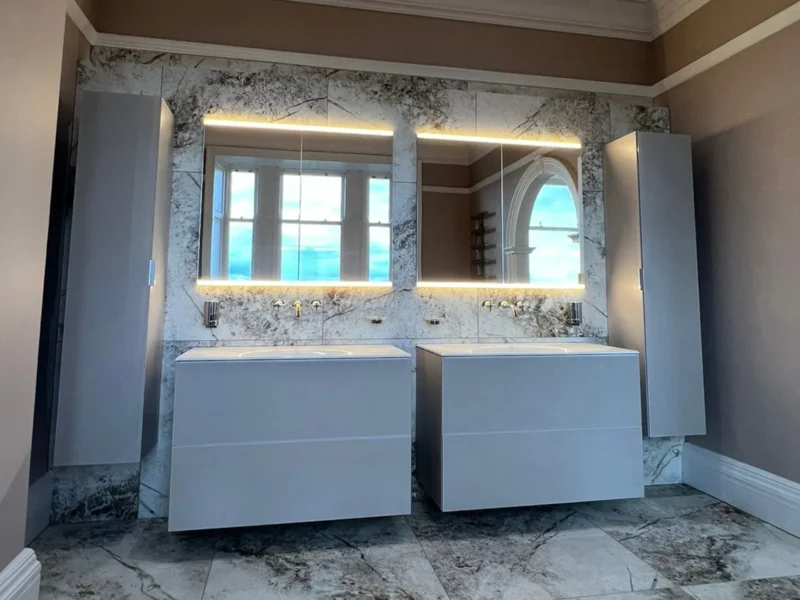
Easier cleaning and improved hygiene
Floating vanities make everyday maintenance noticeably simpler.
With the floor left exposed beneath the unit, cleaning becomes more efficient, allowing dust and debris to be removed without working around legs or plinths.
This reduces the time required for routine cleaning and helps prevent the build-up of dirt in areas that are typically difficult to access.
This design supports better hygiene by keeping the unit clear of the floor, where moisture and residue are more likely to collect.
As a result, floating vanities are particularly well suited to busy residential bathrooms and commercial environments, where ease of upkeep and consistent cleanliness are key priorities.
Flexibility in installation height
Unlike floor-mounted units, floating vanities offer greater freedom when it comes to installation height.
This allows the vanity to be positioned to suit the proportions of the space or the specific needs of the end user, rather than being constrained by a fixed base.
In residential settings, this can support more comfortable everyday use, while in commercial or accessible bathrooms it allows heights to be adjusted to meet inclusive design requirements.
The result is a more considered layout that improves comfort and usability while maintaining a balanced, well-proportioned appearance.
Integration with under-unit lighting
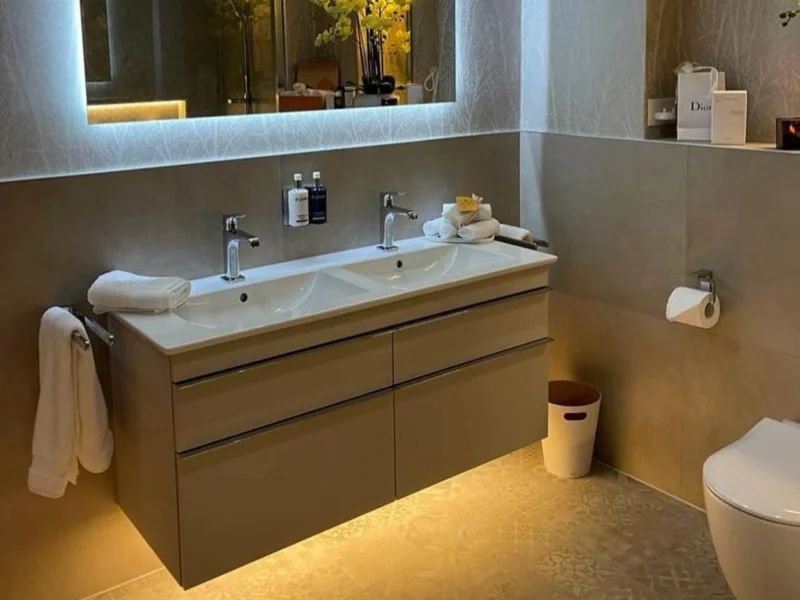
Floating vanities lend themselves naturally to integrated lighting solutions, particularly under-unit lighting that improves everyday usability.
Positioned beneath the unit, this lighting provides low-level illumination that supports safe movement during the night without the need for harsh overhead lights.
It can also improve visibility around the floor area, helping users navigate the space more comfortably in low-light conditions.
When correctly specified, under-unit lighting can be linked to motion sensors or dimming controls, offering hands-free operation and energy-efficient use.
This makes it a practical addition in both residential and commercial bathrooms, where convenience, safety and operational efficiency are key considerations.
Accessibility in residential and commercial settings
From an accessibility perspective, floating vanities offer practical advantages across a range of settings.
Clear floor space beneath the unit improves manoeuvrability for wheelchair users or those with limited mobility, while adjustable installation heights allow the vanity to be tailored to individual needs.
This can make everyday tasks such as handwashing, grooming, or reaching storage areas far easier and more comfortable.
In both residential and commercial projects, this flexibility supports inclusive design principles, ensuring the bathroom works for a wider range of users without compromising the overall layout or functionality of the space.
Materials, finishes, and design choices shaping modern floating vanities
The materials and finishes used in modern floating vanities play a key role in defining both their appearance and performance. Here’s the most common:
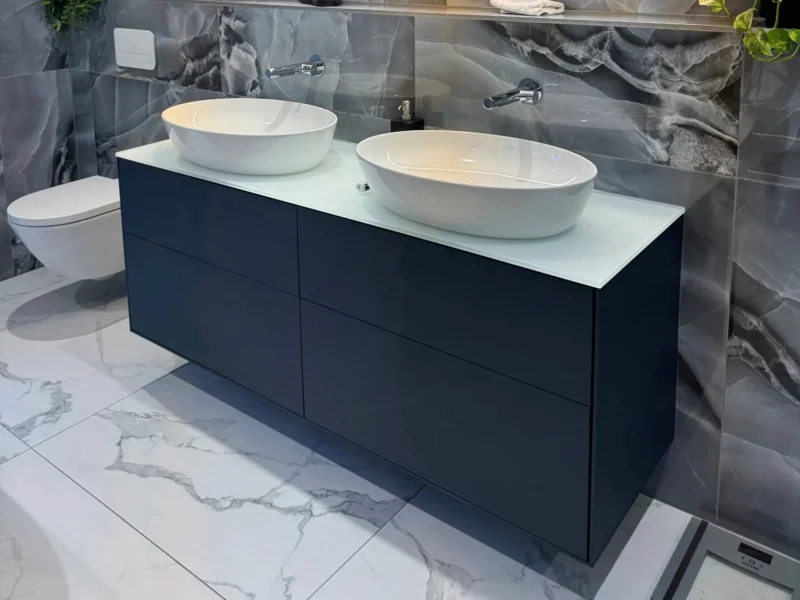
Timber, stone, and composite surfaces
Timber and timber-effect finishes introduce warmth and texture, creating a natural, tactile feel within the space.
Stone and engineered stone surfaces provide durability alongside a premium appearance, while solid surface and composite materials enable seamless basins and countertops that are both practical and easy to maintain.
Material choice plays a key role in shaping the overall aesthetic of the bathroom, whether the aim is understated elegance or a bold, contemporary look.
Handleless designs and integrated basins
Clean lines are central to the appeal of floating vanities, with handleless drawers and integrated basins reinforcing a minimalist aesthetic.
Handleless designs create smooth, uninterrupted surfaces, while integrated basins enhance the sense of continuity for a sleek, streamlined finish.
Together, these design choices enhance visual simplicity while also improving usability, making everyday routines feel more intuitive and efficient.
Matte versus gloss finishes
The finish applied to a vanity has a strong impact on the overall mood of a bathroom. Matte surfaces offer a refined, understated look, softening reflections and lending a calm, contemporary feel.
Gloss finishes introduce a sense of brightness and movement by reflecting light, making them particularly effective in smaller or darker spaces.
The right choice often depends on how the room is lit, how the vanity sits within the space, and the atmosphere the design aims to create.
Coordinating with tiles, walls, and brassware
A floating vanity is most effective when it feels seamlessly connected to the rest of the bathroom rather than standing alone.
Thoughtful coordination of materials and colours helps establish a cohesive design language, allowing the vanity to sit naturally within the space.
Stone or composite surfaces can work in harmony with surrounding tile textures, while timber finishes may be reflected through shelving or subtle accessories.
Aligning the vanity with complementary brassware and fittings further strengthens the sense of cohesion, resulting in a bathroom that feels balanced, intentional, and refined.
Installation and structural considerations
Behind the clean, minimal appearance of a floating vanity sits a need for careful structural planning. Here’s what needs to be considered:
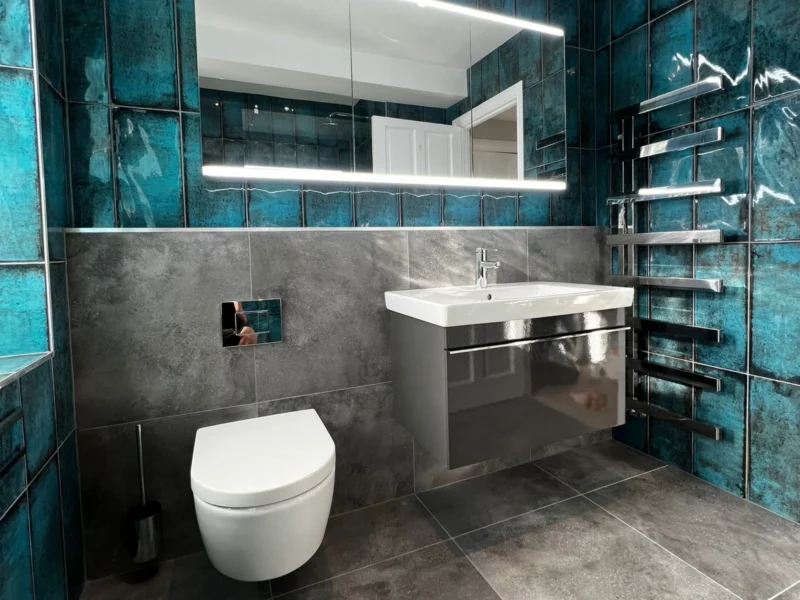
Wall types and reinforcement requirements
The performance of a floating vanity depends on the strength and stability of the wall to which it is fixed.
Support is typically provided by solid walls, reinforced stud walls, or structures with additional bracing, all capable of bearing the combined weight of the unit or basin.
Assessing the wall construction early in the design and planning process is essential to achieving a secure installation that will remain reliable over time.
Plumbing considerations for wall-mounted units
Floating vanities introduce different plumbing requirements than floor-mounted alternatives, particularly where pipework and drainage are concerned.
To preserve a clean, uncluttered appearance, services are typically concealed within the wall cavity or positioned discreetly behind the unit.
Early collaboration with plumbing professionals is essential to ensure water connections, traps and supply lines are accurately planned and integrated without compromising the overall design.
Load-bearing standards and safety
Professionally installed floating vanities are engineered to meet stringent load-bearing standards.
Reinforced mounting rails or brackets are precisely specified to support the combined weight of the vanity, countertop, basin, and ongoing daily use.
Adherence to building regulations and manufacturer guidelines is essential to ensure safety, particularly in commercial and high-traffic environments where durability and compliance are non-negotiable.
Importance of professional specification and installation
While floating vanities can transform a space aesthetically and functionally, their structural requirements mean that professional specification and installation are essential.
A qualified installer will assess wall integrity, specify the correct fixing systems, and coordinate plumbing integration with precision.
When executed correctly, a floating vanity provides long-term durability while achieving the clean, enhanced finish that defines contemporary bathroom design.
Common design mistakes to avoid
Even well-designed floating vanities can underperform if key planning considerations are overlooked. Here are some common mistakes:
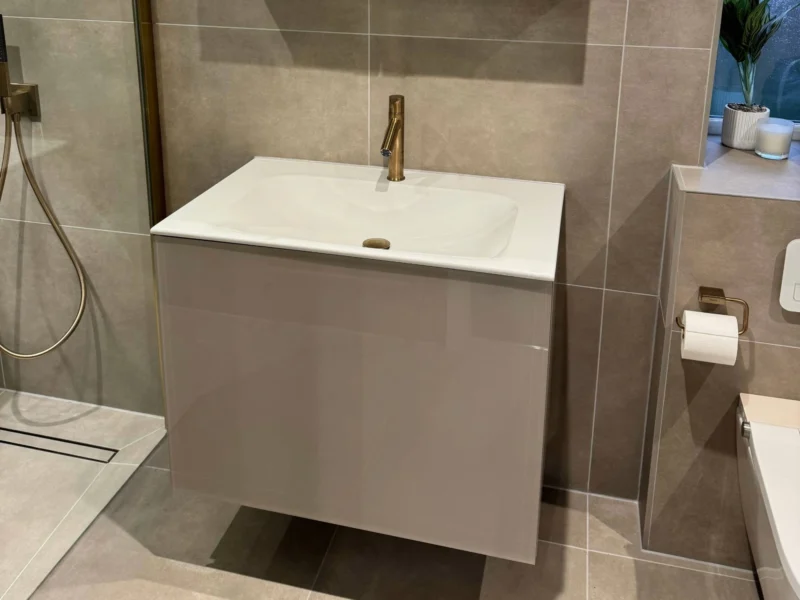
Poor height placement
Incorrect installation height is one of the most common mistakes when specifying floating vanities.
Positioning the unit too high or too low can negatively affect comfort and everyday usability, particularly in family bathrooms or shared spaces.
Setting the vanity at a height appropriate to the intended users is essential, ensuring practical functionality while preserving visual balance within the overall bathroom design.
Insufficient storage planning
Floating vanities are often chosen for their sleek, uncluttered appearance, but this can sometimes lead to underestimating storage requirements.
Without careful planning, everyday essentials can spill into surrounding areas, compromising the intended visual clarity of the space.
Considered drawer configurations, concealed storage solutions, and efficient internal organisation allow the vanity to retain its appearance while delivering the functionality required for daily use.
Mismatched proportions with basin and mirror
A vanity’s impact is influenced by its relationship with surrounding elements, particularly basins and mirrors.
Choosing a basin that is too large or small, or pairing it with a mirror of disproportionate size, can disrupt visual harmony and make the space feel awkward.
Careful consideration of proportion, scale, and alignment is essential to achieving a cohesive, well-balanced bathroom design.
Ignoring long-term maintenance needs
While floating vanities can transform a bathroom’s appearance, their longevity depends on ongoing maintenance.
Selecting materials and finishes that withstand regular use, and planning for easy access to plumbing and fixtures, ensures the unit remains functional and visually appealing over time.
Overlooking these considerations can lead to frustration and unnecessary repairs, detracting from both the aesthetic and practical benefits of the design.
Why floating vanities are more than a passing trend
Floating vanities are no longer just a 2025 trend, but a proven design solution defined by consistent performance across a wide range of projects. Their continued use reflects how well they align with the practical and spatial demands of modern bathrooms, rather than any single stylistic movement.
As expectations around durability and adaptability have increased, floating vanities have proven capable of meeting these requirements without compromising visual quality.
Their suitability across residential and commercial settings highlights their versatility, supporting everything from compact private bathrooms to large-scale, high-traffic environments.
More broadly, floating vanities represent a shift towards fixtures that are designed as part of the architectural framework of a space. Rather than acting as standalone elements, they contribute to a cohesive layout where structure and storage are carefully integrated.
This ability to balance long-term functionality with restrained, purposeful design explains why floating vanities remain a consistent feature of contemporary bathrooms.
Their relevance is sustained not by trend-driven appeal, but by their capacity to respond to evolving design priorities with clarity and reliability.
How H2O Bathrooms can help
At H2O Bathrooms, we understand that specifying the right floating vanity involves more than selecting a style. It’s about creating a bathroom that balances visual impact, practical function and long-term durability, all within the context of a well-considered overall design.
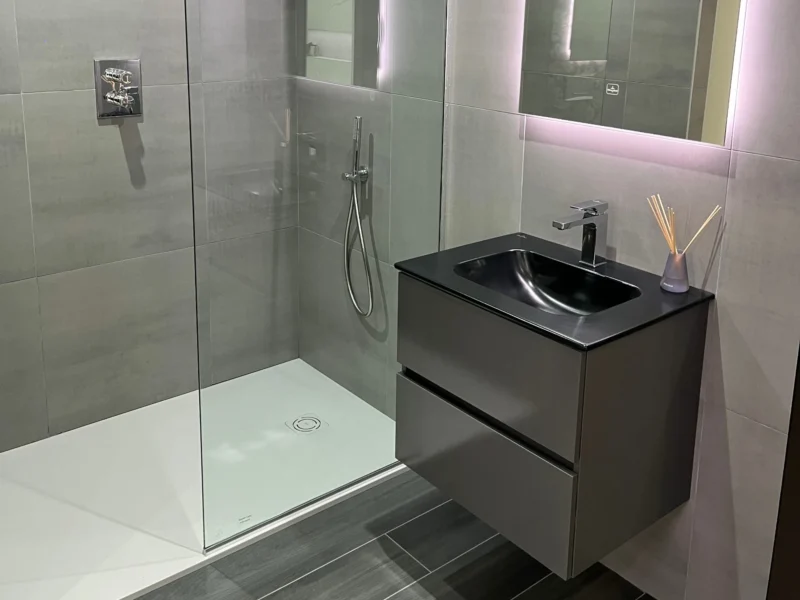
Our team supports both residential and commercial projects with tailored design advice and technical insight.
We guide clients through material selection, finishes, storage configurations and installation requirements, ensuring each floating vanity integrates seamlessly with the wider bathroom scheme.
We work with a carefully curated portfolio of leading bathroom brands, including established European and UK manufacturers known for their quality and design integrity.
These partnerships allow us to specify floating vanities and complementary furniture that meet demanding standards for performance and aesthetics.
Whether you are planning a compact ensuite, a luxury family bathroom or a high-traffic commercial space, we help you navigate the available options and select solutions that are appropriate to both the space and its users.
From initial concept and product specification through to coordination and aftercare, our approach ensures your bathroom not only looks refined but performs effectively for years to come.
Contact us today to speak with our specialists and explore our range of floating vanities for your project.